
WhatsApp Usernames Plan Blocked Over Fraud Fears
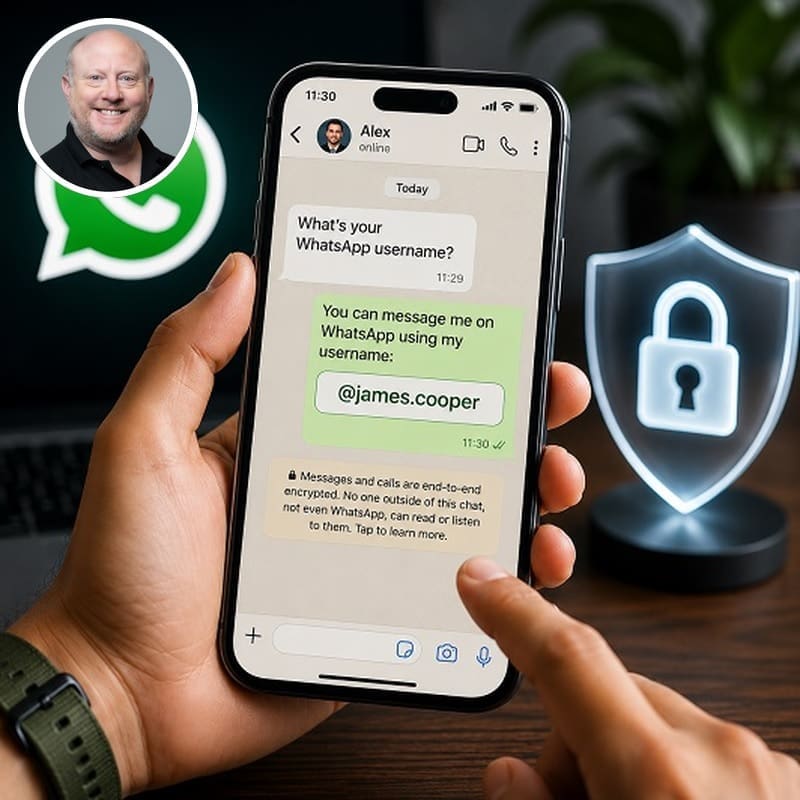
WhatsApp’s plan to let people communicate without revealing their phone numbers has run into immediate regulatory opposition in India, turning what began as a new privacy feature into a much wider debate about online anonymity, fraud and how messaging platforms should balance privacy with security.
Give Your Username Instead Of Your Phone Number
WhatsApp has begun allowing users to reserve unique usernames ahead of a wider rollout planned for later this year. The idea is that, under a new system, WhatsApp users will be able to give someone a username instead of their mobile phone number, meaning they can communicate without revealing the number connected to their account.
WhatsApp explained the reason for the feature, saying: “Sometimes you just want to chat without handing over your digits.”
That could be particularly useful, for example, when joining community groups, meeting someone at an event, communicating with a business or speaking to someone online for the first time.
WhatsApp says the reservation process is being opened gradually because the platform has more than three billion users and many people will inevitably want similar names. Once the option becomes available, users can reserve a name through the Account section of the app’s settings.
How Will Usernames Work?
The feature is designed to provide greater privacy without making WhatsApp users publicly searchable.
It’s understood that there will be no directory of usernames and no suggestions showing people they might want to contact, and someone will need to know the exact username before they can start a conversation.
And A Key
Users will also be able to create an optional username key, providing another layer of protection against unwanted contact.
Once the full feature launches, people who have enabled a username will be able to message a new person or business without their phone number being displayed. However, a mobile number will still be required to create a WhatsApp account in the first place.
For creators, businesses and organisations that want a consistent identity, WhatsApp has also created a way to claim an existing Instagram or Facebook username.
Why Has India Intervened?
However, it seems the rollout quickly attracted regulatory attention in India, WhatsApp’s largest national market.
The Indian government has asked WhatsApp to pause the introduction of usernames in the country while consultations take place, amid concerns that the feature could make fraud, phishing and impersonation easier.
The main concern is that criminals could create usernames resembling those of banks, government departments, businesses or well-known individuals and then use them to contact potential victims without displaying a phone number.
This is particularly significant in India, where authorities have been trying to combat a growing problem with cyber fraud, including so-called digital arrest scams in which criminals impersonate police officers or government officials.
The government intervention came shortly after WhatsApp opened username reservations, transforming the launch from a straightforward product announcement into a test of how privacy features should be balanced against fraud prevention and law enforcement concerns.
What Does WhatsApp Say About The Risks?
WhatsApp argues that it has already built several layers of protection into the system.
High-profile usernames associated with public figures, government bodies, celebrities and verified Meta accounts have been reserved so that they can only be claimed by legitimate owners. The company says variations of well-known names are also being protected.
WhatsApp has also said it will limit the number of new people an account can contact, prevent repeated attempts to guess username keys and use its systems to identify common patterns associated with impersonation and abuse.
Recipients of messages from first-time contacts will also be given contextual information, such as whether the sender has a new account, shares mutual groups with them or is based in another country.
The company says: “We’re taking our time and listening to feedback so that when it rolls out later this year we get it right.”
A Genuine Privacy Benefit
Despite the controversy, there does seem to be quite a clear privacy argument for introducing usernames.
For example, phone numbers are increasingly used as identifiers across banking, online accounts, two-factor authentication and other digital services. Giving one to a stranger can therefore reveal more personal information than someone may realise.
Usernames provide a way to separate someone’s WhatsApp identity from their mobile number, making it easier to communicate with new contacts without immediately sharing that information.
This is particularly relevant for business networking, online marketplaces, community groups, customer enquiries and other situations where people may want to communicate without establishing a deeper personal connection.
WhatsApp summarises the thinking behind the feature by saying: “A phone number is personal and it’s tied to so many parts of your life.”
However, the challenge is that privacy features that protect genuine users can also potentially make life easier for criminals. The debate is therefore not simply about whether usernames are good or bad, but whether platforms can introduce stronger privacy without weakening trust and accountability.
What Does This Mean For Your Business?
For businesses, the introduction of WhatsApp usernames could make the platform more useful for customer communication. Employees may be able to speak with customers, suppliers or new contacts without sharing personal mobile numbers, while businesses could create a more consistent identity across WhatsApp, Facebook and Instagram.
However, the fraud concerns raised by the Indian government also highlight the growing importance of digital identity verification.
If usernames become widely used, businesses may need to be more careful about how customers identify genuine accounts. Criminals already impersonate banks, suppliers, senior executives and well-known brands, and convincing username variations could create another opportunity for social engineering.
Organisations using WhatsApp for customer service may therefore need to communicate clearly which accounts are genuine, while employees should be trained not to assume that a familiar-looking username proves someone’s identity.
The wider story here is really about the difficult balance between privacy and trust. Hiding phone numbers can protect users from unwanted exposure, but every new layer of anonymity can also create opportunities for abuse.
WhatsApp’s challenge is to prove that usernames can provide meaningful privacy without making impersonation and fraud easier. How that balance is achieved could influence not only the future of WhatsApp, but also how messaging platforms around the world design privacy features in the years ahead.
