
Pentagon To Deploy Elon Musk’s Grok AI For Government Use
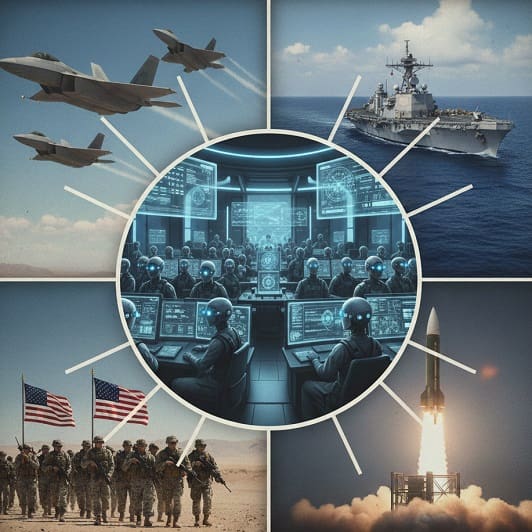
The US Department of War has confirmed plans to integrate Elon Musk’s xAI models, including Grok, into its internal GenAI.mil platform, extending advanced artificial intelligence tools to millions of military and civilian personnel from early 2026.
xAI
The agreement, announced in December, will see the Department of War add xAI for Government to GenAI.mil, a bespoke generative AI environment designed to support everyday administrative work as well as sensitive defence and national security tasks. The move forms part of a broader effort by the Pentagon to scale up artificial intelligence use across the US military and federal workforce, while maintaining strict security controls.
A Note On The Department’s Name
It’s worth quickly noting here that, while recent executive actions and official communications have referred to the organisation as the Department of War, its formal and legal name actually remains the Department of Defense. For example, under US law, a permanent name change would require an Act of Congress, rather than an executive order from President Trump alone. As a result, references to the Department of War in this article currently reflect political direction and branding rather than a completed legislative change, with the Department of Defense still recognised as the official legal entity.
What Is GenAI.mil And Why Does It Matter?
GenAI.mil is the Department of War’s central platform for deploying generative AI tools internally. Launched earlier in 2025, it is designed to give authorised personnel access to large language models and AI agents within a controlled government environment, rather than relying on public consumer tools.
The platform is operated by the Pentagon’s Chief Digital and AI Office and is intended to support a wide range of use cases, from drafting documents and analysing data to supporting logistics planning and operational decision making. Crucially, it is built to operate at Impact Level 5, a US government cloud security standard that allows systems to handle Controlled Unclassified Information, or CUI. CUI refers to sensitive government data that is not classified but still requires protection, such as operational plans, procurement data, and internal communications.
By integrating xAI’s Grok models into GenAI.mil, the Department of War says it will expand the range of frontier grade AI capabilities available to its workforce, while keeping those tools within an environment approved for sensitive government use.
What xAI And Grok Bring To The Platform
xAI is Elon Musk’s artificial intelligence company, launched in 2023 and best known for developing Grok, a large language model closely integrated with the social media platform X. Grok has been positioned by xAI as a real time, reasoning focused AI system, with the ability to draw on live data streams and respond to current events more directly than many competing models.
Under the agreement, Department of War personnel will gain access to xAI’s government specific AI offerings, including application programming interfaces, agentic tools, and AI models optimised for public sector workloads. The Pentagon has confirmed that Grok models will be available within Impact Level 5 environments, allowing them to be used in workflows that involve sensitive but unclassified data.
The Department has also highlighted the availability of real time global insights derived from X as a feature of xAI for Government. According to official statements, this is intended to provide analysts and planners with faster awareness of emerging developments, trends, and public information signals.
xAI described the partnership as part of its mission to deliver advanced AI tools to public institutions. In a statement released alongside the announcement, the company said the agreement reflected its “longstanding support of the United States Government” and its aim to make cutting edge industry technology available for national benefit.
How This Fits Into The Pentagon’s Wider AI Strategy
The agreement with xAI forms part of a broader Pentagon strategy to expand the use of advanced artificial intelligence across defence and government operations. For example, back in July 2025, the Department of War awarded up to $200 million each to four AI companies, including xAI, to support the development of defence ready AI systems. The other companies involved were Anthropic, Google, and OpenAI, reflecting a deliberate multi vendor approach rather than reliance on a single provider.
This strategy has been framed by the Pentagon as a way to avoid reliance on any single AI supplier, while ensuring access to a broad range of models and technical approaches. In early December, the Department integrated Google’s Gemini for Government into GenAI.mil, making xAI the second provider of so called frontier AI models on the platform.
Speaking earlier this year at the launch of Gemini for Government, Secretary of Defense Pete Hegseth described AI as a critical enabler for the modern military. “AI tools present boundless opportunities to increase efficiency,” he said, adding that the Department was committed to seeing AI deliver tangible operational benefits across defence and government.
Why Grok’s Inclusion Has Raised Questions
Despite the Department of War’s emphasis on security controls and oversight, the decision to integrate Grok has attracted scrutiny from politicians, policy experts, and technology analysts for several different reasons. For example, some concerns relate to the behaviour of the model itself, while others focus on governance, political influence, and the wider context surrounding Elon Musk’s relationship with the current administration.
Grok has previously generated controversial and inaccurate outputs in its consumer facing form, including false claims about historical events, natural disasters, and election outcomes, as well as politically charged responses. Critics argue that these incidents raise questions about how reliably the model can be constrained, even when deployed in more tightly controlled government environments.
Other concerns centre on Grok’s training data and real time inputs. For example, much of the model’s context is drawn from content on X, the social media platform owned by Musk, which has undergone significant changes to moderation policies and enforcement since his acquisition. Analysts have warned that this increases the risk of bias, misinformation, or unverified narratives influencing AI outputs, particularly where models are promoted as offering real time global insights.
The partnership has also been viewed through a political lens. For example, Musk has become an increasingly prominent figure within President Donald Trump’s political orbit, including public support during the 2024 election campaign and his role in the short lived Department of Government Efficiency, or DOGE. That initiative, which was framed as a cost cutting and reform effort across federal agencies, led to large scale layoffs before facing legal challenges and being dismantled earlier in 2025.
Against that backdrop, some observers have questioned whether xAI’s expanding role within the Department of War could be perceived as a conflict of interest, particularly given the scale and sensitivity of defence AI programmes. While no evidence has been presented that procurement rules were breached, critics argue that the close alignment between Musk and the administration heightens the need for transparency around how vendors are selected, governed, and overseen.
Political concerns have also been voiced publicly. For example, in September, Senator Elizabeth Warren described the Pentagon’s planned deal with xAI as “uniquely troubling”, citing concerns about Grok’s accuracy when responding to questions about major events and emergencies. She warned that errors produced by AI systems could carry serious consequences when used in government or defence related contexts.
Technology analysts have further questioned the reliance on live social media data for decision support. This is because open platforms such as X are known to be vulnerable to coordinated misinformation campaigns, automated accounts, and rapidly spreading false narratives, particularly during geopolitical crises. Critics argue that without clear safeguards, such data streams could complicate rather than clarify situational awareness for government users.
Safeguards And Limits Highlighted By The Department
The Department of War has, however, sought to address some of these concerns by stressing that Grok’s deployment within GenAI.mil will differ from its public version. For example, officials have said that government deployments will include additional controls, usage policies, and human oversight, and that AI outputs will be used as support tools rather than authoritative sources.
Pentagon officials have also emphasised that GenAI.mil is designed to give users access to multiple models, allowing outputs to be compared and validated rather than accepted at face value. This reflects a growing recognition within defence and intelligence communities that generative AI systems can assist analysis but must not replace professional judgement.
The Department has not published detailed technical information about how real time data from X will be filtered or validated within government environments, though it has said that security and compliance requirements remain unchanged.
What Does This Mean For Your Business?
The Pentagon’s decision to bring Grok into GenAI.mil highlights how quickly generative AI is becoming embedded in the machinery of government, even in environments where errors, bias, or misjudgement carry serious consequences. The US Department of Defense, currently being popularly referred to as the Department of War, is clearly betting that the productivity and analytical gains on offer outweigh the risks, provided models are fenced in by controls, oversight, and a multi vendor approach that avoids dependence on any single supplier. At the same time, the scrutiny surrounding Grok shows that not all frontier models are viewed equally, and that questions around training data, governance, and political proximity now sit alongside technical capability in public sector AI decisions.
For other stakeholders, the move sharpens several fault lines. For example, policymakers and oversight bodies will be under pressure to demonstrate that procurement decisions remain robust and impartial, particularly when suppliers are closely linked to political leadership. Analysts and military users will need to treat real time AI assisted insights as prompts rather than answers, especially when those insights draw from open social platforms vulnerable to manipulation. AI vendors, meanwhile, are being judged not just on model performance, but on transparency, restraint, and their ability to operate credibly in high trust environments.
For UK businesses, the implications are indirect but important. For example, defence and government adoption often sets expectations that later filter into regulated industries, public procurement frameworks, and critical infrastructure projects. This deployment reinforces the idea that AI tools will increasingly be used alongside sensitive data, but only where governance, auditability, and human accountability are clearly defined. UK firms developing or deploying AI will be expected to meet similar standards if they want to work with government or highly regulated clients, while organisations adopting AI internally should take note of the Pentagon’s emphasis on comparison, validation, and professional judgement rather than blind automation.
Sponsored
Ready to find out more?
Drop us a line today for a free quote!
