
TikTok Finalises Deal Creating New American-Controlled Entity
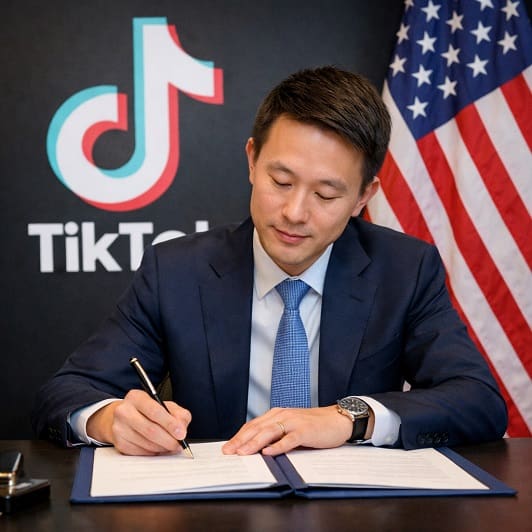
TikTok has formally completed a deal to split its US operations from its global business, establishing a new majority-American joint venture designed to address long-running national security concerns and prevent the platform from being banned in the United States.
A Long-Running Political And Legal Battle
The agreement, announced on 23 January, brings to an end a legal and political saga that has stretched back several years and repeatedly placed the future of TikTok in the US market in doubt, despite its vast popularity with users, creators, and advertisers.
A Deal Years In The Making
The creation of TikTok USDS Joint Venture LLC follows sustained pressure from successive US administrations over the app’s Chinese ownership and the perceived risk that American user data or content recommendation systems could be influenced by Beijing.
Concerns first surfaced publicly during Donald Trump’s first term in 2020, when he attempted to ban TikTok outright. While that effort failed, scrutiny intensified under President Joe Biden, culminating in legislation passed in 2024 that required TikTok’s Chinese parent company, ByteDance, to sell its US operations or face an effective ban.
That law then set a deadline of January 2025, briefly forcing TikTok offline for US users before enforcement was paused. After returning to the White House, Donald Trump repeatedly extended deadlines while negotiations continued with American and international investors. In September 2025, Trump signed an executive order establishing a framework that would allow TikTok to keep operating in the US if it restructured ownership, governance, and technical controls. The announcement this week confirms that those requirements have now been met.
What The New Joint Venture Looks Like
Under the new agreement, TikTok USDS Joint Venture LLC has been established as an independent entity with majority American ownership and control. TikTok says the joint venture will now be responsible for securing US user data, the US version of the app, and the content recommendation algorithm.
In its official announcement, TikTok said the joint venture had been created “in compliance with the Executive Order signed by President Trump on September 25, 2025”, and that it would allow “more than 200 million Americans and 7.5 million businesses to continue to discover, create, and thrive” on the platform.
ByteDance, TikTok’s China-based parent company, retains a 19.9 per cent minority stake in the new company, below the threshold required to trigger a ban under US law. The remaining ownership is held by a consortium of non-Chinese investors.
Three managing investors, Oracle, Silver Lake, and MGX, each hold 15 per cent stakes. Additional investors include the Dell Family Office, Vastmere Strategic Investments, Alpha Wave Partners, General Atlantic affiliate Via Nova, and NJJ Capital, the family office of French telecoms entrepreneur Xavier Niel.
Financial terms of the transaction have not yet been disclosed, although US Vice President JD Vance previously suggested the deal valued TikTok’s US operations at around $14bn, a figure that analysts have noted is lower than earlier estimates.
Governance And Oversight
The joint venture will be overseen by a seven-member board of directors, with a majority of American members. TikTok’s global chief executive Shou Zi Chew will remain on the board, alongside senior figures from the investment groups backing the deal.
Independent oversight is built into the structure through the appointment of Raul Fernandez, chief executive of DXC Technology, as chair of the board’s Security Committee. TikTok says this committee will play a central role in ensuring compliance with national security and data protection requirements.
Also, Adam Presser, previously a senior executive within TikTok and TikTok US Data Security, has been appointed as chief executive of the joint venture. Will Farrell, formerly of Booz Allen Hamilton, a major US government and cybersecurity consultancy, will serve as chief security officer.
Data Protection And Cybersecurity Commitments
A central feature of the agreement is the handling of US user data, which has been at the heart of lawmakers’ concerns. TikTok says all US user data will be stored and protected within Oracle’s secure cloud infrastructure based in the United States.
According to the company, the joint venture will operate a “comprehensive data privacy and cybersecurity program” that will be audited and certified by third-party cybersecurity specialists. TikTok says that this programme will adhere to recognised standards including the NIST Cybersecurity Framework, NIST SP 800-53, ISO 27001, and the Cybersecurity and Infrastructure Security Agency’s security requirements for restricted transactions.
In its announcement (in the TikTok online newsroom), the company said the mandate of the joint venture is “to secure US user data, apps and the algorithm through comprehensive data privacy and cybersecurity measures”, while ensuring ongoing accountability through transparency reporting and external certification.
Algorithm Control Moves To The US
The platform’s recommendation algorithm, widely regarded as TikTok’s most valuable and sensitive asset, has been a particular point of contention, i.e., because it determines what content US users see and how information spreads at scale. Under the new structure, the algorithm used for US users will be retrained, tested, and updated using only US user data.
TikTok says this algorithm will be secured entirely within Oracle’s US cloud environment, with ongoing software assurance processes in place. These include regular source code review and validation, carried out with Oracle acting as a “trusted security partner”.
While the algorithm has been licensed to the US joint venture, experts have noted that retraining it exclusively on American data could subtly alter the type of content users see, although the scale and impact of any changes remain uncertain.
Trust, Safety And Content Moderation
Responsibility for trust and safety policies, including content moderation decisions, will now sit with the joint venture rather than TikTok’s global parent. TikTok says this gives the US entity “decision-making authority” over how content rules are set and enforced for American users.
The safeguards introduced under the agreement will not only apply to TikTok itself, but also to other apps operated by the company in the US, including CapCut and Lemon8.
Maintaining A Global Platform
Despite the separation, TikTok has been keen to stress that the platform will continue to function as a global service. For example, an interoperability framework allows US users to interact with creators worldwide, while US-based creators and businesses can still reach international audiences.
Commercial activities such as advertising, marketing, and e-commerce will continue to be supported through TikTok’s global infrastructure, even as core data and security functions are localised within the US.
Political Reaction And Wider Context
President Trump welcomed the announcement, posting on social media that he was “so happy to have helped in saving TikTok”, and publicly thanking Chinese President Xi Jinping for approving the deal.
The White House and China’s embassy in Washington have been contacted by US media for comment, although neither had issued a formal response at the time of writing.
However, the resolution of TikTok’s US situation stands in contrast to developments elsewhere. For example, in Canada, a federal court recently suspended a government order that would have shut down TikTok’s business operations, forcing a fresh national security review and temporarily protecting access for around 14 million Canadian users.
For TikTok, the establishment of TikTok USDS Joint Venture LLC provides regulatory certainty in its most important overseas market, ending years of uncertainty for users, creators, advertisers, and employees. The longer-term implications for how the platform operates, evolves, and competes in the US will become clearer as the new structure beds in.
What Does This Mean For Your Business?
This deal reshapes how TikTok operates in the United States, placing data control, algorithm oversight, and content moderation firmly within a US governed structure while allowing the platform to continue operating at scale. For American regulators, it represents a rare example of a global consumer technology company being forced to localise core technical systems rather than simply make policy assurances. For TikTok, it removes the immediate threat of a shutdown in a market that accounts for more than 200 million users and millions of businesses that rely on the platform for reach and revenue.
The agreement also sets a clear precedent for how national governments may approach foreign owned digital platforms in future. Data residency, third party security audits, and domestic control of recommendation algorithms are no longer abstract policy demands but concrete requirements that companies may be expected to meet. Other technology firms with global user bases will be watching closely to see how rigorously these safeguards are enforced and whether similar frameworks are proposed elsewhere.
For UK businesses, the outcome matters even though the restructuring is US focused. For example, TikTok remains a major marketing, commerce, and discovery platform for British brands, creators, and agencies that depend on its global reach and advertising tools. Any material changes to how the algorithm is trained or moderated in the US could influence wider content trends, advertising performance, and platform strategy internationally, particularly if similar regulatory pressures emerge in Europe or the UK over data protection and platform governance.
It looks as though advertisers, creators, and partners now gain a period of stability after years of uncertainty, but that stability comes with closer scrutiny of how TikTok balances growth, safety, and regulatory compliance. The platform now appears to have secured its position in the US for the time being, but the structure of the deal makes clear that access to major markets increasingly depends on transparency, technical controls, and political acceptability as much as user growth or innovation.
Sponsored
Ready to find out more?
Drop us a line today for a free quote!
