
Why OpenAI Has Agreed To Deploy AI Inside Pentagon Systems
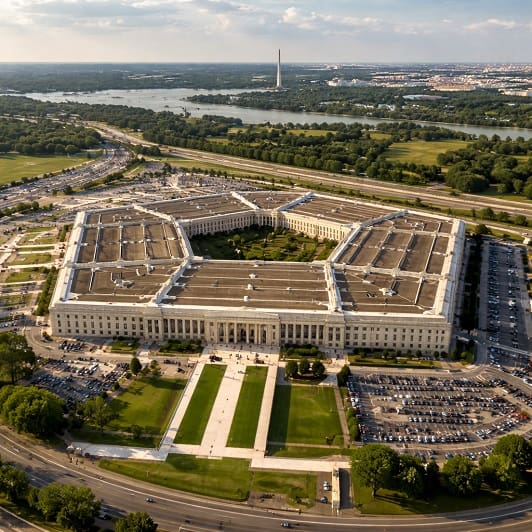
OpenAI has reached an agreement with the Pentagon to deploy its AI models inside classified US government systems, highlighting how rapidly artificial intelligence is becoming part of national security infrastructure.
Department of Defense?
Before getting any further into this new story, it should be noted that, in its public statements, OpenAI refers to the US defence department as the “Department of War”, a name used by the current administration. However, many Americans continue to use the name the Department of Defense, noting that the department is formally established in US law under that title and that any official renaming would require approval from Congress.
What The System Is
Getting back to the main story here, OpenAI is the US technology company behind widely used AI models such as ChatGPT and GPT-4-class systems. These models are designed to analyse text, generate reports, summarise information and assist with complex analytical tasks.
Organisations already use similar AI systems for activities such as software development, intelligence analysis, planning and research. Governments have increasingly been exploring how these capabilities could support national security and defence operations.
What Happened With OpenAI and the Pentagon?
OpenAI confirmed in a recent announcement on its website that it has reached an agreement allowing its AI models to be deployed in classified government environments operated by the Pentagon.
According to OpenAI, these systems will operate inside secure networks used for sensitive national security work, and the deployment will run through a cloud-based architecture rather than installing the models directly on military hardware.
The company says this approach allows the government to use advanced AI capabilities while OpenAI retains control of its safety systems.
In its online announcement, OpenAI said collaboration between governments and AI developers will increasingly be required as the technology becomes more powerful. As the company wrote: “We believe strongly in democracy. Given the importance of this technology, we believe that the only good path forward requires deep collaboration between AI efforts and the democratic process.”
Why OpenAI Says The Deal Is Necessary
OpenAI argues that modern defence organisations are likely to require increasingly capable AI systems.
Military planners already use AI in areas such as intelligence analysis, operational modelling, logistics planning and cyber defence because these systems can process large volumes of information and identify patterns that may be difficult for human analysts to detect quickly.
OpenAI said it believes providing these capabilities with clear safeguards is preferable to governments relying on less controlled deployments.
As the company explained: “We think the US military absolutely needs strong AI models to support their mission especially in the face of growing threats from potential adversaries who are increasingly integrating AI technologies into their systems.”
How The Deployment Will Work
OpenAI says its models will not be embedded directly into weapons systems or military hardware.
Instead, the deployment will operate through cloud-based APIs managed by OpenAI. This architecture allows the company to maintain its safety controls, monitoring systems and model updates.
OpenAI also says cleared company personnel will remain involved in the deployment.
As the company stated: “We retain full discretion over our safety stack, we deploy via cloud, cleared OpenAI personnel are in the loop, and we have strong contractual protections.”
Areas Where It Cannot Be Used
Crucially, for many people, the agreement also establishes three areas where OpenAI technology cannot be used. These include mass domestic surveillance, directing autonomous weapons systems and making high-stakes automated decisions.
Why The Deal Attracted Attention
The agreement emerged during a period of tension between the Pentagon and parts of the AI industry.
Anthropic, one of OpenAI’s main competitors, had been negotiating with the Pentagon but refused to remove safeguards limiting the use of its models for domestic surveillance or fully autonomous weapons systems.
After negotiations broke down, the Pentagon designated Anthropic a “supply chain risk”, preventing US defence contractors from continuing to use its technology.
OpenAI’s agreement followed shortly afterwards, prompting debate about how AI companies should engage with military organisations.
The Wider Context Of Military AI
The OpenAI agreement is part of a broader expansion of AI inside US defence systems.
Elon Musk’s AI company xAI has also reached an agreement allowing its Grok model to be used in classified military networks. As US news website Axios reported: “Elon Musk’s artificial intelligence company xAI has signed an agreement to allow the military to use its model, Grok, in classified systems.”
Axios also highlighted the strategic significance of the move, noting that “up to now, Anthropic’s Claude has been the only model available in the systems on which the military’s most sensitive intelligence work, weapons development and battlefield operations take place.”
These developments seem to suggest that the Pentagon is actively expanding its access to multiple frontier AI systems.
What Does This Mean For Your Business?
For technology companies and organisations using AI systems, the agreement shows how advanced AI models are increasingly being treated as strategic infrastructure rather than purely commercial tools.
Governments are beginning to integrate AI capabilities into systems used for intelligence analysis, defence planning and national security operations. That process is likely to deepen as AI systems become more capable.
For AI developers, this creates a growing responsibility around governance, safeguards and oversight. Decisions about how models are deployed now involve legal, ethical and political considerations as well as technical ones.
For businesses more broadly, the story highlights a wider trend. As AI systems become more powerful and widely adopted, questions about acceptable use, risk management and operational oversight are moving from theoretical discussions into real-world policy decisions.
In short, the OpenAI agreement seems to show that the future of advanced AI will be shaped not only by technological innovation but also by how governments, companies and regulators decide these systems should be used.
Sponsored
Ready to find out more?
Drop us a line today for a free quote!
