
Lidl Expands Into Mobile Plans With App-Only Strategy
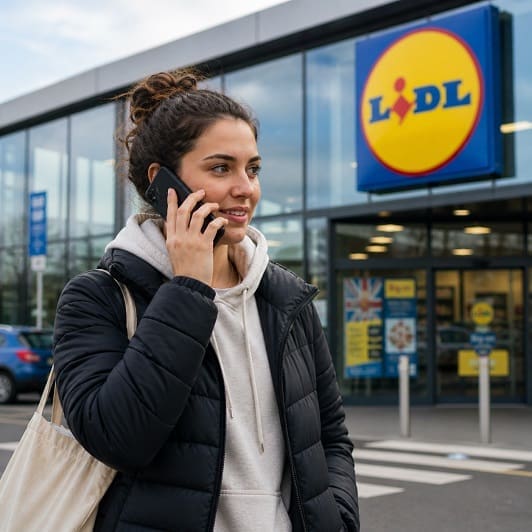
Lidl is expanding into mobile phone plans through a new global partnership, using its scale and loyalty app to offer low-cost, flexible connectivity without traditional contracts.
Why Lidl Is Moving Into Mobile
Lidl’s move into telecommunications is built on a strategic partnership with 1GLOBAL, which gives the retailer the technical platform and regulatory framework needed to operate as a Mobile Virtual Network Operator, or MVNO. This means Lidl can offer mobile services without building its own network, instead using existing infrastructure while focusing on pricing, customer access, and digital delivery.
The company is positioning this as a response to a clear customer need for “easily accessible, flexible, and affordable connectivity of the highest quality without long-term contract commitments”. That focus aligns closely with Lidl’s broader retail model, where simplicity, price transparency, and convenience are central to how it competes.
This is not Lidl’s first step into mobile, as it already operates Lidl Connect in several European markets, but the new partnership significantly expands its ambitions, both geographically and technically.
How Lidl’s New Mobile Offering Works
The most notable aspect of Lidl’s approach is how tightly the service is integrated into its existing ecosystem. For example, rather than just launching as a standalone telecom brand, the new plans will be delivered primarily through the Lidl Plus app, which already has tens of millions of users across Europe.
Within that environment, customers will be able to purchase and manage mobile plans digitally, often using eSIM technology, with no need for physical SIM cards or long-term commitments. Lidl describes this as part of a broader effort to make mobile services “simple, digital, and affordable” for a mass audience.
Julian Beer, Executive Vice President at Lidl International, framed the ambition clearly, stating: “We are democratizing mobile communications. Simple, affordable, and of the highest quality.”
The app-led model also allows Lidl to control the customer relationship directly, rather than relying on traditional retail channels or third-party distributors, which could help reduce costs while increasing customer loyalty.
A Different Approach To Telecom Competition
Lidl’s strategy stands out because it is not trying to compete as a conventional telecom provider. Instead, it is using its existing retail scale, customer base, and digital platform to enter the market from a different angle.
With more than 100 million customers and a presence in over 30 countries, Lidl is effectively turning its loyalty ecosystem into a distribution channel for telecom services. As the company notes, “we are creating an attractive platform for established telecommunications companies” by combining reach, data, and customer engagement.
This model also benefits network operators, which gain additional usage and customer access without having to manage the end-user relationship directly.
Hakan Koç, founder and CEO of 1GLOBAL, highlighted this broader transformation, saying: “We want to make mobile communications as intuitive, flexible, and digital as possible for millions of people.”
How This Compares To Existing UK Mobile Offers
The timing of Lidl’s expansion comes as existing UK mobile providers are already adjusting their pricing and plan structures.
For example, Asda Mobile has recently removed its cheapest 5GB plan priced at £4.50, while slightly reducing the price of its 10GB plan to £5.95 per month. It has introduced new mid-range options, including 50GB for £7.95 and 80GB for £9.50, while increasing the price of its 100GB plan from £10 to £12. These changes apply to 12-month and 24-month contracts, although the company has confirmed there will be no mid-contract price rises.
This highlights a key contrast. Traditional MVNOs like Asda Mobile continue to operate within a familiar structure of fixed plans, contract terms, and tiered pricing. Lidl, by comparison, is moving towards a more flexible, app-based model with short-term or no-contract options, which could appeal to customers who want greater control and fewer commitments.
What Could Hold Lidl Back?
Despite the scale and ambition behind the move, several challenges remain.
Customer trust will be a factor, particularly when it comes to relying on a supermarket brand for a critical service like mobile connectivity. Network quality will depend on local operator partnerships, meaning the experience may vary between regions.
There is also the question of how widely the service will be rolled out, and whether key markets like the UK will be included in the first phase. While Lidl’s reach is significant, telecom markets are heavily regulated and highly competitive, which could slow expansion.
The app-only model, while efficient, may also limit access for customers who prefer more traditional purchasing methods or who are less comfortable managing services digitally.
What Does This Mean For Your Business?
For UK businesses, the immediate impact may be limited, but the wider development matters more than the product itself. Retailers using digital platforms and existing customer ecosystems to enter telecoms shows a clear change in how connectivity is being delivered and sold.
This development shows how industries are increasingly overlapping, with companies using data, apps, and customer relationships to expand into adjacent markets. Businesses that rely on mobile connectivity, whether for staff, operations, or customer engagement, may benefit from more flexible and potentially lower-cost options as competition increases.
There are also implications for customer expectations. As more services move towards app-based, contract-free models, users may begin to expect the same level of simplicity and control across other digital services.
At the same time, the entry of large retailers into telecoms adds pressure to existing providers, which could accelerate changes in pricing, service structure, and customer experience. Businesses that stay aware of these changes will be better placed to take advantage of new options as they emerge, while also understanding how evolving customer expectations could affect their own digital services and offerings.
