
France Plans Shift From Windows To Strengthen Sovereignty
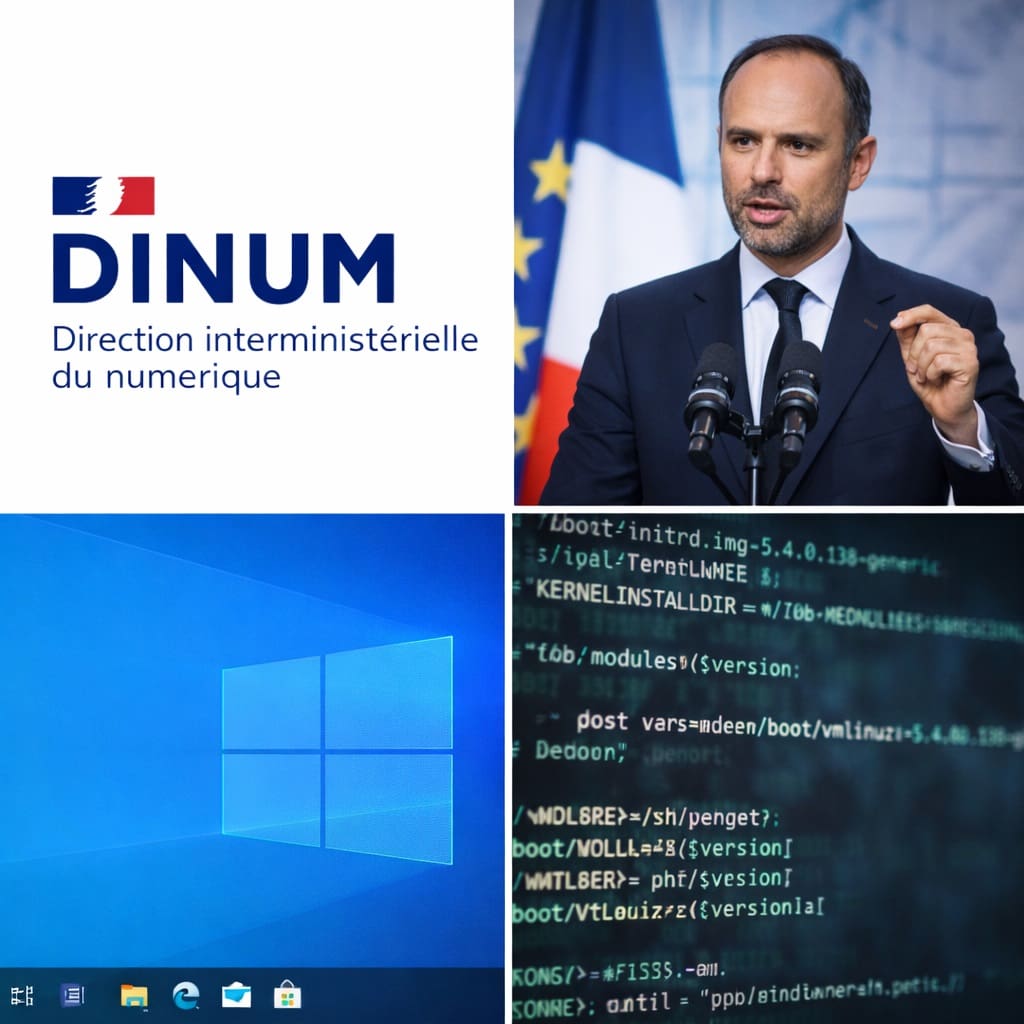
France is planning to replace parts of its government use of Windows with Linux, signalling a wider shift across Europe to reduce reliance on US technology and regain control over critical digital infrastructure.
A Move From Windows To Linux-Based Alternatives
The French government has confirmed that it will begin moving some public sector systems away from Microsoft Windows in favour of Linux-based alternatives, starting with workstations within its digital agency, DINUM.
This is not an isolated technical decision but is part of a broader state-led strategy to reduce dependence on non-European technology providers across multiple areas, including operating systems, collaboration tools, cloud platforms, and data infrastructure.
In an official statement, the French government explained its position, saying: “The State can no longer simply acknowledge its dependence; it must break free… We can no longer accept that our data, our infrastructure, and our strategic decisions depend on solutions whose rules, pricing, evolution, and risks we do not control,” referring primarily to large non-European (US) technology providers.
This is what policymakers are increasingly referring to as “digital sovereignty”.
What Digital Sovereignty Really Means
At its core, digital sovereignty is about control. It essentially means having the ability to decide how systems are built, where data is stored, who has access to it, and how services can be used or withdrawn. It also means reducing exposure to external political, legal, and commercial pressures that sit outside national or regional control.
France’s approach reflects a growing belief that relying heavily on foreign-owned platforms, particularly those based in the United States, creates risks that go beyond cost or vendor lock-in.
As another French government statement put it, “Digital sovereignty is not optional, it is a strategic necessity.” In short, this highlights a situation where the issue is no longer just about which software works best, but about whether a country can actually rely on the systems it depends on.
Why US Tech Dependence Is Now Seen As A Risk
The concern is not simply that US companies dominate global technology markets, but that they operate under US law and political control, which can change quickly and have far-reaching consequences.
That risk has come into sharper focus under the current administration of Donald Trump, where foreign policy has become more unpredictable and, at times, openly confrontational, with sanctions and political pressure being used more aggressively against perceived opponents.
One example is the use of sanctions powers by the US government, where organisations or individuals can effectively lose access to digital services if companies are required to comply. In some recent cases, this has reportedly led to email accounts being shut down and access to financial and digital systems being restricted.
This is no longer viewed as a theoretical risk, and European policymakers and analysts increasingly point to real-world situations where access to email, cloud services, or financial systems has been disrupted due to geopolitical decisions.
From a European perspective, that creates a situation where critical infrastructure could be affected by actions taken outside its control, regardless of whether the technology itself is secure.
As Thierry Carrez of Linux Foundation Europe has noted in industry discussions, technical safeguards cannot fully protect against a scenario where a provider is legally required to withdraw service. That is the risk France and others are now trying to reduce.
A Wider European And UK Concern
France is not acting alone. Across the European Union, there is now a coordinated effort to identify and reduce reliance on foreign technology providers.
For example, the European Parliament has already directed the European Commission to assess areas of dependency, and several countries, including Germany and the Netherlands, are investing in open-source and sovereign alternatives.
Also, in the UK, similar concerns are being raised. A recent report from the Open Rights Group warned that “this over-reliance on foreign tech companies is now an urgent national security issue as well as an economic threat,” highlighting how deeply embedded US technology has become in public infrastructure.
The report also pointed to the broader implications of that dependence, noting that a small number of companies have been able to “gain control of the UK’s digital infrastructure, locking the government into wasteful contracts and shaping tech policy in their favour.”
This is not just about technology choices. It is about influence, control, and resilience.
What This All Means In Practice
Moving away from platforms like Windows is only one part of a much larger shift.
Governments are increasingly looking at alternatives to widely used tools such as Microsoft 365, Google Workspace, and US-based cloud services, often favouring open-source solutions or locally hosted platforms.
France, for example, has already begun replacing Microsoft Teams with a domestically developed video conferencing tool and is planning to migrate sensitive health data to a “trusted” platform under its own control.
That said, there is also a recognition that full independence is neither realistic nor necessary, and digital sovereignty is better understood as reducing reliance on any single provider or jurisdiction, rather than attempting to eliminate external technology altogether. That means diversification, interoperability, and greater visibility over where risks exist.
What Does This Mean For Your Business?
For businesses across the UK and Europe, this raises some important questions about reliance on major technology providers.
Many organisations are deeply integrated with platforms such as Microsoft, Google, and Amazon, often without fully considering the broader implications of that dependence.
The growing focus on digital sovereignty suggests that resilience is becoming just as important as functionality or cost, particularly where critical systems and sensitive data are involved.
It also highlights how legal and geopolitical factors can now directly affect access to technology, not just its availability or performance.
In practical terms, this does not mean businesses need to abandon existing platforms, but it does mean understanding where dependencies exist and how they could impact operations if circumstances change.
For technology providers, there is also increasing pressure to demonstrate transparency, data control, and regional independence, particularly as governments and large organisations reassess their long-term strategies.
France’s move away from Windows is unlikely to be the last of its kind, and it reflects a broader shift in thinking that is gathering pace.
The key takeaway here is that technology decisions are no longer purely technical. They are becoming strategic choices about control, resilience, and trust in an increasingly uncertain global environment.
