
UK Plans Major Expansion Of Facial Recognition
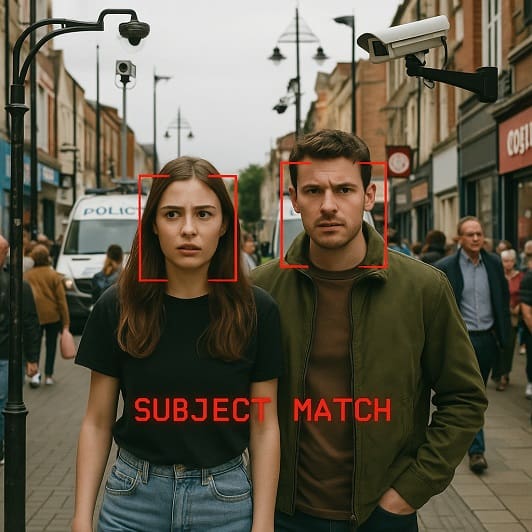
The government has set out plans to expand the use of facial recognition and other biometrics across UK policing, describing it as the biggest breakthrough for catching criminals since DNA matching.
A National Strategy For Biometrics
The Home Office has launched a ten week consultation to establish a new legal framework covering all police use of facial recognition and biometric technologies. This would replace the current mix of case law and guidance with a single, structured system that applies consistently across forces.
The plan includes creating a dedicated regulator overseeing facial recognition, fingerprints and emerging biometric tools. The Home Office says a single body would provide clarity and help forces apply safeguards more confidently. It also proposes a national facial matching service, allowing officers to run searches against millions of custody images through one central system.
Breakthrough
Launching the consultation, Crime and Policing Minister Sarah Jones said, “Facial recognition is the biggest breakthrough for catching criminals since DNA matching,” adding, “We will expand its use so that forces can put more criminals behind bars and tackle crime in their communities.” Her view reflects the government’s belief that existing deployments have already demonstrated clear operational value, particularly in identifying violent offenders.
Why Now?
The push for expansion comes as police forces face increasing pressure to track offenders across regions and to manage high volumes of video supplied by retailers, businesses and members of the public. Also, recent cases of prisoners being released in error, or disappearing before arrest, have highlighted the difficulty of locating suspects quickly without technological support.
Public Tolerance For Certain Uses
Government research published alongside the consultation appears to suggest high public tolerance for certain uses. For example, according to the government’s figures, 97 per cent of respondents said retrospective facial recognition is at least sometimes acceptable, while 88 per cent said the same about live facial recognition for locating suspects. Ministers may see this as support for building a clearer framework, although rights groups argue that acceptability is dependent on strict safeguards and transparency.
The Need For Oversight
That said, independent accuracy testing has reinforced the need for stronger oversight. For example, the National Physical Laboratory found that earlier systems used in UK policing produced significantly higher false alert rates for Black and Asian people. The Home Office now acknowledges these disparities, noting that updated systems and reviews have since been introduced. Even so, the findings have shaped calls for clearer legal boundaries before expansion proceeds.
When These Changes Might Take Effect
The consultation runs through early 2026, after which ministers will draft legislation for parliamentary scrutiny. The Home Office estimates that introducing a new legal regime, establishing the regulator and deploying the national facial matching service will take around two years. During that period, existing deployments will continue under current guidance.
Police forces already using live facial recognition, including the Metropolitan Police and South Wales Police, will continue targeted deployments. Trials using mobile facial recognition vans across multiple forces are also expected to continue, and the national facial matching service is scheduled for testing in 2026.
How The Technology Works Across UK Forces Today
Police currently rely on three distinct facial recognition tools, each supporting different operational needs, which are:
1. Retrospective facial recognition. Used during investigations, this compares still images from CCTV, doorbell cameras, mobile footage or social media against custody images. It is the most widely used form, and police say it speeds up identification in cases where investigators have a clear image but no confirmed identity.
2. Live facial recognition. These systems scan faces in real time as people pass a camera. The software compares each face to a watchlist of individuals wanted for specific offences or subject to court conditions. When a possible match arises, officers decide whether to stop the person. Deployments are usually short, targeted and focused on high footfall areas.
3. Operator initiated facial recognition. This mobile app allows officers to check identity during encounters by comparing a photo to custody images, avoiding unnecessary trips to a station solely for identification.
Police leaders say these tools allow forces to locate wanted individuals more efficiently. Lindsey Chiswick, the National Police Chiefs’ Council lead for facial recognition, says the technology “makes officers more effective and delivers more arrests than would otherwise be possible”, adding that “public trust is vital, and we want to build on that by listening to people’s views”.
Legal And Ethical Issues
Legal concerns have followed facial recognition since its earliest deployments, and several landmark rulings continue to shape how police use the technology. For example, back in 2020, a Court of Appeal ruling in the Ed Bridges case remains the most significant legal challenge to date. In this case, the court found that South Wales Police’s early use of live facial recognition breached privacy rights because of inadequate safeguards, incomplete assessments and insufficient checks on whether the system discriminated against particular groups.
Also, the Equality and Human Rights Commission has criticised aspects of earlier Metropolitan Police deployments, saying forces must demonstrate necessity and proportionality each time. The Information Commissioner’s Office has also warned forces to ensure accuracy and justify the retention of custody images belonging to people never convicted of an offence.
Accuracy Problems
Accuracy remains central to the ethical debate. For example, the National Physical Laboratory found that in one system previously used operationally, Asian faces were wrongly flagged around four per cent of the time and Black faces around five and a half per cent, compared with around 0.04 per cent for white faces. For Black women, false alerts rose to nearly ten per cent. These figures show how demographic disparities can emerge in real deployments and highlight the importance of system configuration.
Rights groups warn that these issues could lead to wrongful stops or reinforce existing inequalities. They also argue that routine scanning in public spaces risks creating a sense of constant surveillance that may influence how people move or gather. Liberty has said it is “disappointed” that expansion is being planned before the risks are fully resolved, while Big Brother Watch has urged a pause during the consultation.
Support Strong From Police
It’s worth noting here that, perhaps not surprisingly, support within policing remains strong. For example, former counter terror policing lead Neil Basu says live facial recognition is “a massive step forward for law enforcement, a digital 21st century step change in the tradition of fingerprint and DNA technology”, while noting that it “will still require proper legal safeguards and oversight by the surveillance commissioner”. Police forces repeatedly stress that every alert is reviewed by an officer rather than acted on automatically.
Industry Supports Structured Rollout
Industry organisations also appear to support a structured rollout. For example, Sue Daley, Director of Tech and Innovation at techUK, says “regulation clarity, certainty and consistency on how this technology will be used will be paramount to establish trust and long term public support”. The technology sector argues that clear rules will help build confidence both inside and outside policing.
Charities
Charities focused on vulnerable people have also highlighted some potential benefits. For example, Susannah Drury of Missing People says facial recognition “could help to ensure more missing people are found, protecting people from serious harm”, though she also stresses the need to examine ethical implications before expanding use.
That said, civil liberties groups continue to call for stronger limits, arguing that wider deployment risks normalising biometric scanning in everyday spaces unless strict rules are imposed regarding watchlists, retention and operational necessity.
Areas For Further Debate
The proposals raise questions that will remain live throughout the consultation period. For example, these include how forces will define and maintain watchlists, how the new regulator will enforce safeguards, what thresholds will apply before live facial recognition can be deployed, and how demographic accuracy will be monitored over time. Businesses that operate high footfall environments, such as shopping centres and transport hubs, are also likely to face questions about how their video systems might interact with police requests as adoption increases.
What Does This Mean For Your Business?
It seems that, following this announcement from the government, policymakers now face a moment where practical policing needs, public confidence and legal safeguards must be aligned in a way that has not been achieved before. The consultation sets out an ambition for national consistency and clearer rules, although the evidence presented across this debate shows that accuracy, oversight and transparency will determine whether expansion strengthens trust or undermines it. The range of views from policing, civil liberties groups, industry and charities illustrates how differently this technology is experienced, and why the government will need to resolve issues that sit well beyond technical capability alone.
The implications extend into policing culture, investigative practice and public space management, which will all look different if facial recognition becomes a mainstream tool. Forces anticipate faster identifications, clearer procedures and more reliable ways to locate individuals who pose a genuine risk. Civil society groups, by contrast, point to the potential for overreach unless firm limits are embedded in law. These competing priorities will shape how the regulator operates and how the Home Office interprets proportionality in real deployments.
Businesses also sit at the centre of this discussion because they capture and provide a significant volume of the video footage used in retrospective searches. Retailers, transport hubs and major venues may face new expectations about how they store, secure and share images, and these responsibilities may grow as facial matching becomes more accurate and more widely used. Clearer rules could help organisations understand how to cooperate with investigations without exposing themselves to unnecessary compliance risks, particularly around data protection and equality duties.
The wider public interest lies in how these decisions affect everyday life. Public attitudes will depend on whether safeguards are visible, whether wrongful identifications are prevented, and whether live deployments remain tightly focused rather than becoming a routine feature of public spaces. A national framework could provide that reassurance if it genuinely addresses the concerns raised during testing and legal review. The coming months will show how far the government is prepared to go in defining those boundaries and whether the final model satisfies the mix of operational urgency and ethical caution that has defined this debate so far.
Sponsored
Ready to find out more?
Drop us a line today for a free quote!
