
Australia Tells AI Data Centres To Generate Their Own Power
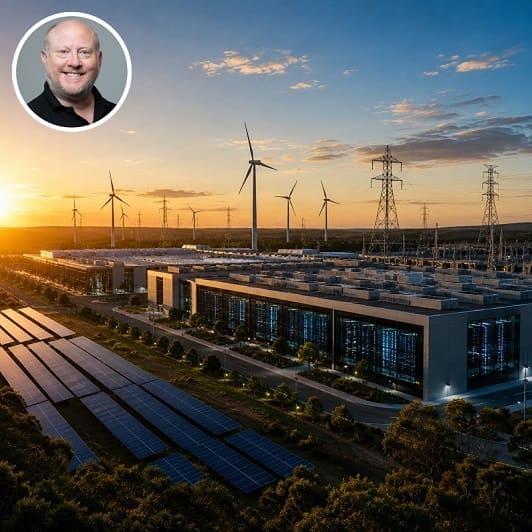
Australia is proposing new national rules that would make the next generation of large AI data centres build enough new electricity generation to match the power they consume, helping prevent rapid AI expansion from pushing up household bills or placing extra pressure on the country’s grid.
What Has Been Announced?
Prime Minister Anthony Albanese announced the proposals during a speech at the University of Sydney, where he set out plans for a new national framework covering the location, energy use, water consumption and wider environmental impact of large data centres.
Under the proposed rules, operators would be legally required to underwrite new power supplies, pay the full cost of connecting their facilities to the electricity network and ensure that households and other businesses are not left funding the infrastructure needed to support them.
Most significantly, large data centres would have to add at least as much electricity to the grid as they consume.
Albanese summarised the policy by saying data centres would need “to be net-generators, not net-users”.
The government intends to seek agreement from state and territory leaders before introducing legislation to the Australian Parliament early next year. This means the requirements are not yet legally binding, and many of the practical details still need to be developed.
What Does Putting Power Back Mean?
A data centre cannot literally return the same electricity it has already consumed. Instead, the proposed requirement means operators would need to support enough new generation to match the energy demand created by their facilities.
In practice, this is likely to involve funding or entering into long-term agreements with new renewable energy projects, such as solar or wind farms, together with energy storage or other reliable back-up generation.
That last element is important because AI data centres operate continuously, while renewable energy production changes according to weather conditions and the time of day. The Australian government has therefore said operators must also support “firming”, which refers to the storage or alternative generation required to provide electricity when renewable output is low.
The aim is to ensure that new data centres bring additional power into the system rather than consuming electricity that homes, public services and existing businesses already depend upon.
Why Now?
AI requires substantial physical infrastructure comprising servers, cooling equipment, network connections and specialist computing hardware. As increasingly powerful AI models are developed and used more widely, the amount of electricity and water required to operate this infrastructure is growing rapidly.
Australia wants to attract more AI investment, but the government is concerned that allowing developers to build facilities before environmental and infrastructure rules are agreed could leave communities carrying the costs.
As Albanese explained: “We cannot revisit this issue after companies have built whatever they want, wherever they want, and try and then re-open negotiations.”
His argument is that Australia’s land, energy resources and investment potential give it enough influence to set conditions before major projects are approved.
The Australian government also believes clearer national rules could benefit responsible investors by replacing different local and regional requirements with one consistent framework.
Water Is Part Of The Plan
Electricity is not the only sustainability concern surrounding large data centres. Many facilities use substantial amounts of water to prevent computing equipment from overheating, which is particularly significant in a country that regularly experiences drought and water scarcity.
Albanese described Australia as “the sunniest continent on earth” but also “the driest”, and said data centres would be required to minimise water use, maximise energy efficiency and pay for any extra water infrastructure they require.
The location of future facilities will therefore matter, particularly where communities are already facing pressure on local water supplies or where electricity networks have limited spare capacity.
Part Of A Wider Global Problem
Australia’s announcement comes as other countries face growing concern about the impact of data centres on energy systems.
For example, in Ireland, data centres consumed 23 per cent of the country’s electricity during 2025, almost as much as all urban and rural households combined. The country now requires new facilities to provide their own flexible generation and obtain most of their annual electricity from new renewable projects.
Technology companies are also struggling to reconcile AI growth with their own environmental commitments. Microsoft, for example, has reported a sharp increase in emissions as it expands its global data centre infrastructure, despite maintaining targets to become carbon negative and water positive by 2030.
Public opposition is also becoming more organised in communities concerned about electricity prices, water use, emissions, planning decisions and the limited number of permanent jobs created by some large facilities.
Australia’s proposed approach attempts to address those concerns before its AI data centre sector expands much further.
What Does This Mean For Your Business?
For businesses, the announcement highlights how the environmental cost of AI is becoming a practical commercial and regulatory issue rather than simply a matter for sustainability reports.
Organisations increasingly using AI services may face closer scrutiny over where their computing resources are hosted, how those facilities are powered and whether claims about renewable energy represent genuinely new generation or simply the purchase of existing certificates.
The Australian model could also influence other countries looking for ways to attract AI investment without passing its infrastructure costs on to households and existing businesses.
Much will depend on the final rules and how carefully the requirement is measured and enforced. However, this reflects a broader change in expectations, with companies building energy-intensive AI infrastructure increasingly expected to create the additional power, grid capacity and water infrastructure their growth requires rather than assuming the public will provide it.
