
Tech News : Travel And New Devices Driving Global eSIM Adoption
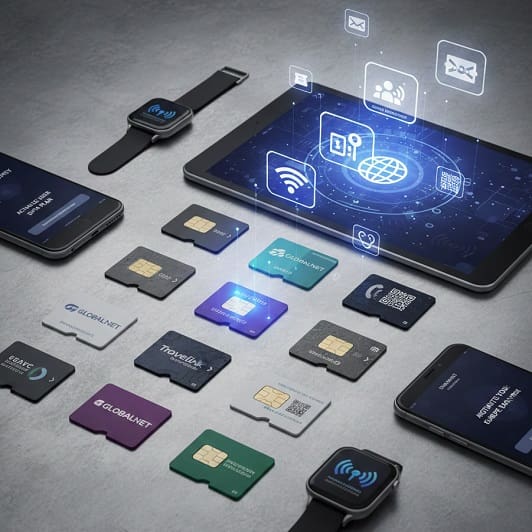
Global use of embedded SIMs is finally starting to accelerate as international travel and wider device support push the technology towards the mainstream.
What Is An eSIM And Why Does It Matter Now?
An eSIM (embedded SIM) is a programmable chip built directly into a phone or other device, replacing the removable plastic SIM card. Instead of inserting a new card when you change network, you download a digital “profile” from a mobile operator or travel provider. That means you can switch to a new plan, or add local data while abroad, without touching the hardware.
Not New
The technology itself is not new. In fact, eSIM has been in the market for around a decade, but actual usage has remained modest. Global adoption hovered around 3 per cent last year and is only just crossing 5 per cent this year, even though far more phones now ship with eSIM support.
Growing
However, it seems that behind those small percentages, the installed base is growing rather quickly. Research (Counterpoint) estimates that around 23 per cent of smartphones shipped in 2024 included eSIM capabilities, with the figure on track to rise sharply later in the decade. Other forecasts suggest eSIM connections across consumer and IoT devices could reach more than 4 billion by 2030, up from about 500 million in 2024.
For consumers and businesses, the appeal is simple. For example, eSIM promises easier network switching, instant activation, and one less physical component to lose or damage. The question has been how to move eSIM from a niche feature on high-end phones to something people actively use.
Travel Turns eSIM Into A Real-World Tool
The clearest reason for this recent upward trend appears to be international travel. For example, surveys indicate that around 51 per cent of eSIM users rely on the technology for travel, making it one of the most successful early use cases. For example, instead of paying high roaming charges or queuing for a local SIM at the airport, travellers can now buy a local or regional data plan in an app, scan a code and be online before the plane doors open.
Could Disrupt Roaming
Analysts say travel eSIMs are now set to disrupt roaming at scale, with adoption of third-party travel eSIM downloads expected to triple by 2030. Tourism this year has already exceeded pre-pandemic levels, boosting demand for seamless, always-on connectivity among budget-conscious and digitally savvy travellers.
A separate survey (Counterpoint Research Global Consumer eSIM Survey) across seven countries found that 87 per cent of travel eSIM users felt eSIM improved their travel experience, showing how strongly people respond once they have tried it. Forecasts now suggest retail spending on travel eSIM services will grow sharply over the next couple of years, with travel eSIMs set to take a significant share of global travel connectivity spending by 2028.
Security Attractive
Security also appears to be part of the appeal. For example, eSIM profiles are often tied to secure hardware elements within the device, making them harder to clone or tamper with than traditional SIM cards. For business travellers and remote workers, that combination of lower costs, easier setup and stronger security is a powerful incentive to move away from legacy roaming arrangements.
Device Makers Push Compatibility Into The Mainstream
The other major driver is device compatibility. For example, early support came from Google’s Pixel 2 and Apple’s iPhone XR in 2017–2018, but eSIM remained a premium feature for several years. Apple then took a decisive step in 2022 by removing the physical SIM slot from US iPhone models entirely, forcing users to rely on eSIM. Google followed with its own eSIM-only Pixel 10 handset this year.
Apple has extended the strategy this year with the launch of the eSIM-only iPhone Air and optional eSIM-only versions of the iPhone 17 series in more than 11 countries. These models gain a small but meaningful battery advantage by removing the space and power budget associated with a physical SIM tray.
Supported By Cheaper Devices
At the same time, eSIM is moving down the price ladder. Analysts note that more than 60 eSIM-enabled smartphones were launched in the first half of 2025 alone, showing that mid-range and even budget devices are starting to support the technology. In 2024, just 23 per cent of smartphones shipped with eSIM capabilities, but by 2030 over 80 per cent of smartphones are expected to be eSIM or iSIM capable, drastically reducing the “my phone does not support it” barrier.
The China Factor
It seems that China is likely to be crucial. For example, after Apple’s eSIM-only launch there, Chinese mobile network operators began offering eSIM support in October this year (2025). Analysts now expect major domestic brands such as Huawei, Xiaomi, Oppo and Vivo to gradually add eSIM to more models, including mid- and low-end smartphones, rather than jumping straight to eSIM-only designs. Given the influence of these brands across Asia and Africa, wider support could accelerate adoption in many price-sensitive markets.
Investors, Startups And Mobile Operators Reactions
The travel eSIM boom has already created a busy ecosystem of digital-first providers. Companies such as Airalo, Holafly, Nomad, Truphone and Kolet offer app-based eSIM plans for individual countries, regions or global travel, often at prices that undercut traditional roaming and with far clearer data allowances.
Their growth has attracted some substantial investment. Digital-first travel eSIM resellers now issue several thousands of eSIMs daily and are scaling rapidly, powered by strong investor confidence and rising demand. Airalo raised $220 million in a funding round that pushed it to unicorn status, while Holafly reports more than 15 million eSIMs sold and over $500 million in cumulative revenue.
Traditional Networks Too
It’s worth noting that the traditional mobile network operators are also adapting to this trend. Many are revising roaming tariffs, launching their own travel eSIM apps, and introducing regional packs aimed at popular travel corridors. The aim is to keep customers within their own ecosystem rather than losing them to third-party apps when they travel. Partnerships are emerging across the wider travel sector too, with airlines, hotels and online travel agencies integrating eSIM offers into their booking flows as an extra service and revenue line.
For UK businesses, this competition could translate into better value and more flexible connectivity options for staff who travel regularly or work across borders. It also introduces a more complex procurement landscape, with in-house teams needing to weigh direct operator offers against third-party platforms and travel-industry bundles.
Barriers That Could Slow The Curve
Despite the positive momentum, several obstacles still stand in the way of mass adoption. The first is simple awareness. Many consumers still do not know what an eSIM is or that their phone supports it. That knowledge gap makes it harder for travel apps and operators to market eSIM to first-time users.
Another key barrier is ease of use. For example, the standard process for many services involves buying a plan, receiving a QR code by email and then scanning it with the phone that will host the eSIM. This often means finding a second device to display the code, which is far from ideal when you have just landed in a new country. Analysts expect more seamless activation flows to emerge as platforms mature, but for now the experience can feel technical or awkward to first-time users.
There are structural challenges in the background as well. Low entry barriers, intensifying competition and aggressive responses from mobile network operators could push prices down and squeeze the margins of smaller providers. Some mobile operators also face legacy IT systems that make fully digital onboarding difficult, slowing their ability to support eSIM at scale or forcing customers to visit stores to complete the process.
There is also the matter of market fragmentation to consider. For example, alongside the global players, there is a rising group of regional specialists offering highly targeted packs for specific countries or corridors. That gives travellers more choice but increases the risk of confusing offers, inconsistent quality and limited brand recognition. Analysts expect that over time the sector will see consolidation, with long-term winners emerging on the strength of customer loyalty, coverage quality and strategic partnerships, not just headline price.
Education, Experience And The Next Phase Of Growth
Analysts seem to broadly agree that travel and device compatibility will continue to work together as the main accelerants for eSIM over the next five years. As more phones ship with eSIM or iSIM as standard, awareness should gradually improve, especially among travellers who encounter the technology in a practical context and then decide to adopt it at home. Repeat usage is expected to remain a key growth engine in the short term, with frequent travellers downloading multiple eSIMs each year, followed by a surge in new users as eSIM becomes the default capability for most smartphones.
For now, the picture seems to be one of a market moving beyond its niche origins. It’s true to say that eSIM still really only accounts for a minority of global mobile connections, but travel experiences, stronger device support and a more competitive provider landscape are steadily normalising the idea that connectivity can be downloaded rather than slotted in.
What Does This Mean For Your Business?
eSIM is steadily moving from a niche feature to something far more consequential for consumers, network operators and the wider travel industry. The combination of rising international mobility and far broader device compatibility has created conditions where eSIM is no longer an optional extra for frequent flyers but a realistic alternative to traditional roaming for mainstream users. This matters because every positive first-time experience strengthens awareness and confidence, which in turn accelerates long-term adoption across domestic markets as well as travel.
For UK businesses, this momentum presents several opportunities alongside some practical considerations. For example, more competitive travel eSIM offerings could reduce connectivity costs for staff working overseas or moving between regions, while the security benefits of eSIM profiles tied to secure hardware elements may reassure organisations with strict data protection requirements. Businesses will also need to assess whether to procure eSIM services directly through their mobile network operators or through the growing number of digital-first providers, each offering different levels of flexibility, pricing and support. The shift towards eSIM-enabled devices across mid-range and budget segments should also simplify future planning for corporate device fleets, removing the need to manage physical SIM logistics for large numbers of users.
This transition has implications for mobile operators as well. Growing competition from app-based providers is forcing them to rework long-standing roaming models, invest in more modern digital onboarding processes and respond more flexibly to customer expectations shaped by eSIM convenience. Investors and startups are responding to this change, pursuing scale while preparing for a market that could ultimately consolidate around providers able to deliver consistent connectivity, strong partnerships and simple user journeys.
Also, it’s worth noting here that the challenges highlighted by analysts are likely to define how quickly eSIM becomes the default option. For example, awareness gaps, fragmented offers and cumbersome setup are still slowing the curve, and overcoming these barriers will require coordinated effort from device makers, operators and digital-first players. Even so, the trajectory points towards a world where downloading connectivity becomes as normal as downloading an app, with clear benefits for travellers, consumers and the businesses that depend on reliable mobile access.
Sponsored
Ready to find out more?
Drop us a line today for a free quote!
